


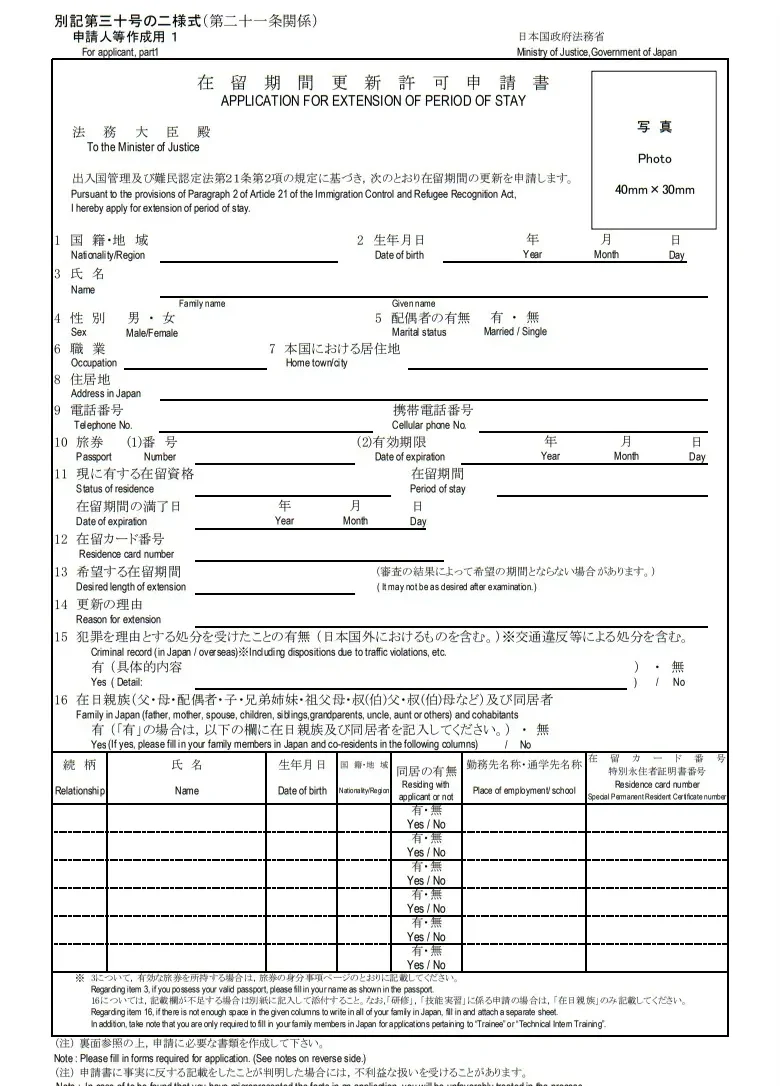
Many of you may have recently seen news reports suggesting a significant increase in fees (revenue stamps) for residency procedures in Japan.
This shift is not merely a price hike; it is driven by a broader objective to fundamentally restructure Japan’s immigration and acceptance system. There are three key reasons behind this change:
- Adjustment of Administrative Costs (Beneficiary-Pays Principle) Current fees, such as the 6,000 yen for renewals, have remained largely unchanged for nearly 50 years since 1978. However, administrative costs have risen due to global inflation and increasingly complex screening processes. The government is moving toward a “beneficiary-pays” model, where those utilizing the system bear a fair share of the costs rather than relying solely on tax revenue.
- Alignment with International Standards In many Western countries, visa application fees can range from tens of thousands to hundreds of thousands of yen. Japan’s fees are currently extremely low by global standards. By aligning with international benchmarks, the government aims to maintain a faster and higher-quality screening system.
- Securing Resources for a “Harmonious Society” The increased revenue from this revision is intended to fund essential measures for coexistence with foreign residents. This includes enhancing daily life support, expanding multilingual services, and strengthening measures against illegal stays.
Currently, a bill to set the upper limits for these fees is being deliberated in the Diet, with implementation expected by March 2027. While specific amounts will be determined by future government ordinances, we must keep a close watch on further developments.
Current Status of the Review (As of May 2026) The Japanese government is currently in the process of amending the law to fundamentally restructure the system through deliberations in the Diet.
Current Timeline
- March 10, 2026: Cabinet approval of the bill to amend the Immigration Control Act.
- April 28, 2026: The bill was passed by the House of Representatives (Lower House).
- Current (May 2026): The bill is under deliberation in the House of Councillors (Upper House).
In this article, we will discuss the details of the proposed fee increases as currently reported and how we should prepare for these changes.
Estimated Figures for the “Proposed Fee Increases”
According to the proposed revision currently under government consideration, a “tiered system” is expected to be introduced, where the fee increases depending on the length of your granted period of stay.
| Type of Procedure | Current Fee (From April 2025) | Reported Estimated Fee |
| Extension/Change of Stay (1 year) | 6,000 yen | Approx. 30,000 yen |
| Extension/Change of Stay (3 years) | 6,000 yen | Approx. 60,000 yen |
| Extension/Change of Stay (5 years) | 6,000 yen | Approx. 70,000 yen |
| Permanent Residency Application | 10,000 yen | Approx. 200,000 yen |
Please note that these figures are only “estimates” based on current considerations and have not yet been officially finalized.
Why is there such a significant increase in fees?
According to news reports, fees have historically been calculated based on “actual administrative costs.” However, the government is now moving toward a new pricing model that considers the “costs of increasingly sophisticated screening processes” and “international fee standards.”
For example, applying for permanent residency in countries like the United States or the United Kingdom can cost hundreds of thousands of yen. It appears that Japan is shifting its policy to align more closely with these global standards.
What can we do now to prepare?
If this revision is passed, it is expected to take effect during “Fiscal Year 2027” (between April 2027 and March 2028).
While it may seem like there is still plenty of time, those considering an “Application for Permanent Residency” should keep the following points in mind:
Apply Early if You Meet the Requirements If you already meet the criteria for Permanent Residency (such as years of residence and income levels), applying before the fee increase takes effect is the best way to minimize your financial burden.
Aim for a “Long-term Period of Stay” If every renewal starts costing tens of thousands of yen, the benefits of obtaining a 3-year or 5-year permit—rather than repeating 1-year renewals—will become significantly greater. Make sure to stay on top of your tax and pension payments as well as required notifications to prepare yourself for a longer-term permit.
Leave a Reply